

All articles
Facilities Leaders Gain Boardroom Authority by Framing Maintenance as Business Continuity
Chris Nance Jr., Senior Facilities and Fleet Operations Manager at Maryland's Department of Housing and Community Development, describes how shifting from work order language to the vocabulary of continuity, cost control, and risk gives FM teams a direct path to the executive table.
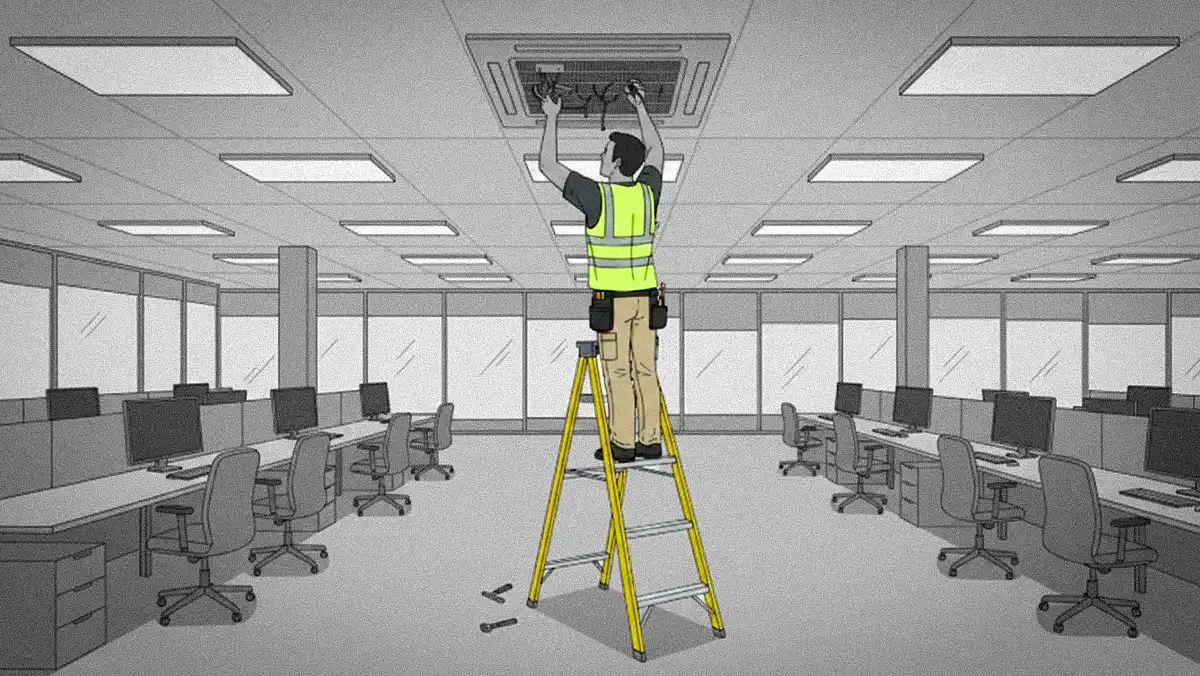

Facilities management isn't about maintenance anymore. It's about business continuity.

Facilities management is no longer evaluated by how quickly a repair gets made, but by whether operations stay uninterrupted and risk stays contained. When a main water line burst at a state government facility after hours, the executive team joined a call within minutes. They did not ask how the pipe would be fixed, but whether the organization could function through the night and whether employees would return to a safe environment the next morning. That distinction reflects a larger shift in how leadership defines the role of FM.
Chris Nance Jr., Senior Facilities and Fleet Operations Manager at the Maryland Department of Housing and Community Development (DHCD), was on the other end of that call. DHCD finances housing opportunities and community revitalization across Maryland, and Nance oversees the facilities operations, vendor governance, and fleet management that keep those programs running. His career includes prior roles at Carnegie Mellon's Software Engineering Institute, Covington & Burling, and Booz Allen Hamilton, all environments where facilities have to align with institutional complexity.
"Executives didn't ask how we were going to fix the pipe. They asked if operations could continue and if the facility would be safe tomorrow. That's when you realize facilities management isn't about maintenance anymore. It's about business continuity." Nance sees the same dynamic playing out across the profession. FM teams that adopt the language of executive leadership move faster into strategic conversations than those still reporting in work order terms. Several forces drive that shift.
A new generation: The profile of FM leadership is changing. Nance points to newer leaders completing MBA programs and coming from civil engineering and electrical engineering backgrounds who bring a different operating lens. "You're seeing facilities leaders transition from work order speak to outcomes, the language of executive leadership," he says. "That comes with a different perspective."
Seats from ops to the C-suite: FM leaders appear at every level of strategic planning, from operational managers to directors reporting into the COO. Nance describes it as a direct result of the integration happening across the discipline. "We're in these conversations now because of the strategic integration that's going on in facilities management," he says. "Facilities management strategy is a continuity strategy."
Engineering environments: The most effective teams stop waiting for things to break. They build redundancy into every layer of strategy to prevent disruption before it escalates. "We curate and engineer the facility's environment so that we alleviate disruption instead of being in that constant reactive state," Nance says.
That proactive posture requires a communication infrastructure to match. Nance describes a deliberate rhythm: daily one-on-ones with his staff, biweekly department meetings, and scaled-up cadences for larger projects that demand closer coordination. The point is not to add meetings. It is to build channels that surface problems early enough to keep them from becoming emergencies.
Communication as infrastructure: "Your communication strategy has to be aligned. Your communication channels have to be strong," Nance says. He treats daily check-ins and department updates not as administrative routine but as the tissue between proactive planning and real-time execution.
Quiet as proof of performance: One of the most persistent misconceptions about FM, Nance argues, is that quiet means idle. "You may not hear us. It may be quiet. But that's because so much of the work has been done," he says. "That means somebody somewhere was up doing a sixteen-hour shift. That means some team somewhere was in a two-to-three-hour meeting. That means we continue to be integrated and proactive."
The charge Nance leaves is direct and applies regardless of sector, whether government, healthcare, QSR, or retail. The work itself does not change. The assets still need tracking. The systems still need maintaining. But the way teams talk about that work determines whether they stay in the boiler room or earn a voice in the boardroom. "We have to move away from reactive work order language and start speaking in executive terms. Are we protecting time? Are we controlling costs? Are we mitigating risk? That's how facilities management earns its place as a strategic business unit."

.webp)