
All articles
Facilities Data Becomes a Profit Safeguard As Restaurants Confront Tech and Labor Gaps
As restaurants face shrinking service talent and smarter equipment, bartaco’s Nic Stoyer details why CMMS discipline has become essential to protecting uptime and profits.


Most people use the CMMS as a break-fix functionality. The reality is, there's so much data and so many other things you can do with the system that we've been scaling and building out to drive efficiencies.

Most restaurant facilities teams still treat their CMMS like a digital suggestion box. A ticket goes in, a vendor shows up, an invoice gets paid, and the system moves on. Used this way, CMMS quietly locks operators into higher costs, longer downtime, and zero accountability. Built properly, though, it becomes something far more valuable: the operational backbone that turns maintenance into data, exposes waste, enforces standards, and protects margins every day.
Nic Stoyer is the Senior Director of Development and Facilities at bartaco, where he oversees the infrastructure and performance of more than 30 restaurants. With over 15 years of experience across development, facilities, and construction, he brings a rare blend of operational and technical depth to the role. A Certified Restaurant Facility Professional and Chair-Elect of the Restaurant Facility Management Association, Stoyer has also led expansion and facilities operations for brands including Nando’s PERi-PERi and Iron Hill Brewery & Restaurant. He sees one of the industry’s biggest blind spots as a failure to fully leverage the facilities technology already in place.
"Most people use the CMMS as a break-fix functionality. They set it up, somebody places a service call, it goes to a vendor, a vendor comes out and fixes the thing, they invoice in the system, and it's done. The reality is, there's so much data and so many other things you can do with the system that we've been scaling and building out to drive efficiencies," says Stoyer. He argues that this disciplined, data-first approach is a necessary defense against industry trends that make reliance on outside vendors riskier.
As restaurant equipment gets smarter and more complicated, creating smarter operations driven by predictive AI, the role of a modern facilities leader now increasingly requires them to act as an "IT specialist, a data miner, and understand equipment inside and out." That rising complexity is occurring just as a skills shortage hits skilled trades from electricians to plumbers.
Pipeline problems: Stoyer frames the technician shortage as a generational and economic squeeze that’s already showing up in day-to-day operations. "When construction jobs are paying eighty, ninety, a hundred dollars an hour, and service tech roles are paying forty, the pipeline breaks," he says. "The experienced techs are retiring, the backfill isn’t there, and service consistency suffers."
Binders to browsers: Stoyer notes that while today’s workforce skews less experienced, today's techs benefit from and operate with an unprecedented advantage: instant access to information online. He recalls a friend who ran an HVAC business before the internet, when every service truck carried numerous bulky manuals because there was no alternative. Today, that same technician can diagnose a Pitco fryer, troubleshoot an AccuTemp griddle, or calibrate a TXV valve in minutes using a quick search or a walkthrough on YouTube. Stoyer explains, "What once required flipping through binders now happens instantly through Google, transforming access to knowledge from a logistical burden into one of the industry’s greatest strengths."
To counteract this external volatility, Stoyer’s strategy is to enforce data-driven accountability through the CMMS, turning subjective complaints into objective data points. His team embeds rich detail into the system, cataloging every piece of equipment and its potential failures. For example, the brand’s Rational ovens have nearly a hundred error codes loaded into the platform, so a manager can select "error 56" and the service vendor knows instantly it's a blower motor issue. That level of detail allows his team to challenge vendors who overcharge or fail to arrive prepared. The system also serves as a "single-pane sign-in," consolidating everything from parts ordering to troubleshooting videos into one mobile-friendly hub designed to help managers spend more time engaging with guests and staff.
No excuses: The result is a culture of direct accountability for vendors and internal teams alike. When a vendor fails to bring the right part despite being given a specific error code, Stoyer’s team is empowered to say, "Absolutely not. We gave you the information to show up with the right parts. Because you didn't, that's your problem, not my problem." The same standard applies internally. If a manager ignores troubleshooting prompts and incurs a $350 charge to flip a breaker, Stoyer is clear: "That's your fault. We gave you the tool to do your job and you didn't use it."
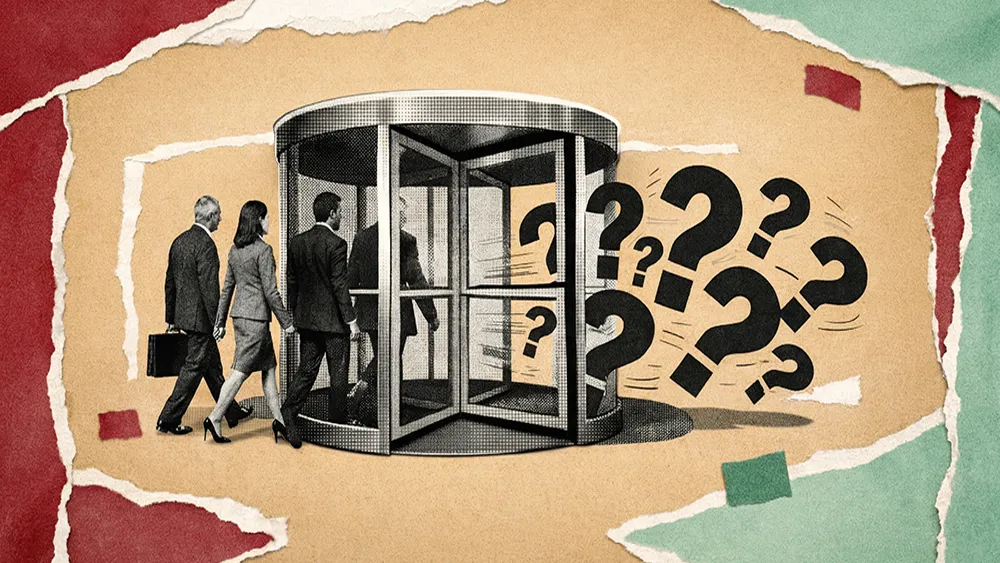
Training on tap: Stoyer treats training as infrastructure, not an add-on, especially in what he calls the restaurant industry’s constant "revolving door." "You can’t rely on institutional memory when teams change this often, so the system has to carry the knowledge," he says. His team layers formal monthly Manager in Training sessions with on-demand, embedded learning, using QR codes on equipment to surface cleaning, maintenance, and troubleshooting videos directly on the floor. "If someone can scan an oven and immediately see how to take care of it, that’s how you keep standards consistent and prevent problems before they turn into service calls," Stoyer says.
For Stoyer, the industry’s rush toward robotics exposes a hard truth operators can’t afford to ignore: automation without serviceability is operational fantasy. He challenges tech vendors on what happens after the demo, not before it. "Everyone talks about dialing in remotely, but what matters is who shows up when something breaks," he says. "If you go fully autonomous and a robot goes down, you could be forced to shut a restaurant for two weeks waiting for a fix, and that will never work on your bottom line." Until robotics companies build real, nationwide service coverage with trained technicians and authorized repair networks, Stoyer is blunt about the outcome. "There’s no backfill, no service map, and without that, no one’s actually going to buy it," he concludes.