

All articles
When Everything Feels Urgent, Scorecards Help Facilities Managers Set Clear Priorities
Brian Powell, Director of Maintenance and Reliability with Western Sugar Cooperative, breaks down his approach to results-oriented management: clear, relevant KPIs that speak to concrete results, and matching scorecards to ensure employee performance is recognized.
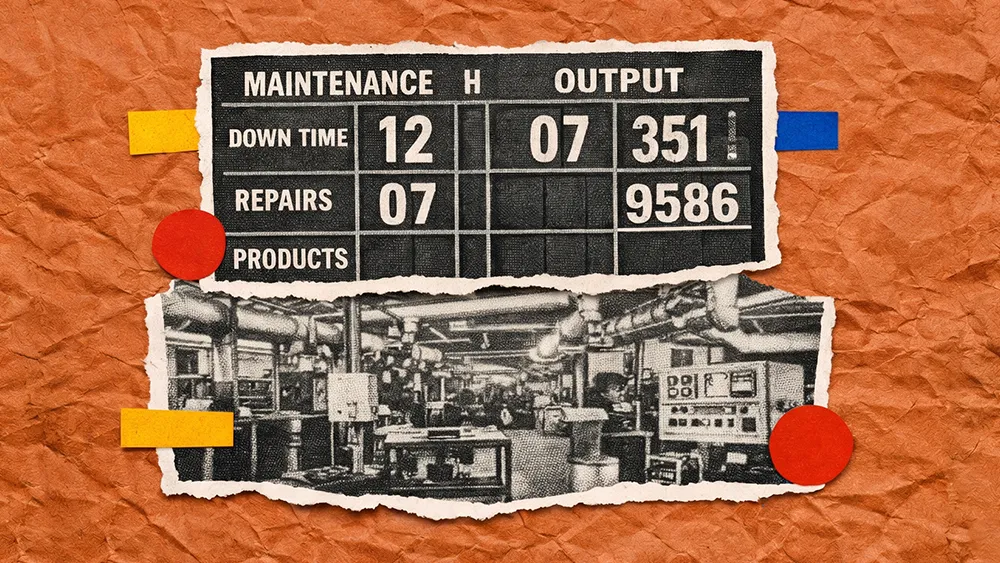

How do you know if you're doing a good job? 'No news is good news' is not a strong performance indicator to me.

Championship teams win by executing the same unglamorous drills every day. Maintenance teams operate on that same principle, but too often without a scoreboard. In many plants, technicians show up and put in the work without clear benchmarks, leaving them guessing at priorities and whether progress is actually being made. That ambiguity turns effort into inefficiency, pulling teams away from the proactive maintenance that drives real performance.
For Brian Powell, translating those championship drills into shop-floor reality comes down to a single operational baseline: the ability to build and execute a weekly schedule. As Director of Maintenance and Reliability at Western Sugar Cooperative and an active Certified Maintenance & Reliability Professional, Powell brings experience from leadership roles at Xcel Energy, Amazon Robotics fulfillment operations, and MillerCoors, where he worked across high-speed manufacturing and reliability engineering environments. Across those roles, he has consistently moved teams from vague expectations to measurable targets, using tools that range from simple spreadsheets to enterprise-scale systems.
When teams operate without clear benchmarks, that ambiguity contributes directly to an execution squeeze on the shop floor. "How do you know if you're doing a good job? 'No news is good news' is not a strong performance indicator to me. I want people to say, 'We were scheduled ten work orders today, and we got them all done,'" says Powell.
The scoreboard test: Powell applies the idea of “doing a good job” to every process with the clarity of a scoreboard. “If I’m scheduled for 10 work orders and complete all 10, that’s a good day. If I schedule 50 and complete 30, I know exactly why those 20 were missed.”
To eliminate that ambiguity and support the structured routines found in modern preventive maintenance programs, Powell organizes his metrics using a straightforward "four P's" framework: People, Process, Product, and Profits. The approach is all about selecting KPIs that directly align with the behaviors a team needs to change.
Under People, he tracks leading indicators, such as safety observations. Process covers quality measures like OEE, Product tracks volume, and Profit focuses on efficiency. He pairs these pillars with a strict weekly schedule baseline and capacity utilization metrics. In his experience, teams extract far more value from complex CMMS facilities data management when they first establish these basic behavioral habits.
The north star: In Powell's experience, teams extract far more value from facilities data management when they first establish these basic behavioral habits. "The ultimate measure of a maintenance department is the ability to build and execute a weekly schedule. The only reason we should not be executing our schedule is because of an equipment breakdown that's pulling us away."
The $300k vanishing act: Powell points to the "Profits" pillar as a crucial tool for exposing hidden financial leaks. At a previous facility, he notes, "we had $300,000 worth of parts that did not get checked out to a work order, so we didn't know where they went, when they got used, or how often."
His approach to measuring performance started long before he had access to Amazon’s tech infrastructure. At a previous company, he recalls building a foundational scorecard using Excel. He selected 15 metrics tied directly to the behaviors he wanted to drive, starting with safety. By tracking safety observations and discussing them regularly, he saw a 22% increase in the number of staff who agreed with the statement "my manager cares about safety" on internal surveys.
Cowboys and KPIs: Powell credits his time at Amazon for sharpening this perspective. He views objective scorecards not as corporate surveillance, but as organizational equalizers that protect technicians from subjective bias. "How can I provide a performance review that is fair and objective? If I'm a fan of the Dallas Cowboys, I'll most likely give them a higher performance rating even when they don't do well. With these scorecards, your rating is based on objective measures we've been doing all year."
But introducing these tools frequently sparks pushback. When Powell first presented his scorecard to a group of 15 engineers, roughly 60% rejected the idea. For many leaders, the real work lies less in the software itself and more in preparing the team for a new level of operational visibility. As the metrics rolled out, Powell focused on coaching rather than punishment. If someone missed their marks, he paired them with a peer who was excelling. Over time, the scorecard transformed performance from a private judgment delivered by a manager into a shared, transparent conversation.
The soft launch: Rather than forcing the system, Powell proposed a trial to win over team members who aren't fully on board. "I wasn't aggressive. I didn't press. I said 'Let's just give this a shot. Are you open to just giving this a try for a couple of months?' And I was consistent with it, making sure I wasn't chastising them but helping them improve where they might be missing their mark."
Ultimately, Powell flips the traditional script on corporate metrics. He treats KPIs as a mechanism to make a technician's hard work visible to leadership. That visibility plays a crucial role in aligning daily effort with what the business actually values; a dynamic that holds true across operations, from proactive facilities management to the quieter, behind-the-scenes work of invisible lab management. For Powell, that alignment requires just a handful of clear measures: weekly schedule compliance, capacity utilization, and a balance of reactive versus proactive work. Used consistently, those numbers give teams a shared language to define a winning week, long before any complex new software is introduced. "You might believe you're going above and beyond. But if your manager doesn't see value in that, you need alignment there. When your annual review comes around, you want to be recognized for the work you're doing. And if your manager doesn't see value in it, it's not going to happen."

.webp)