
All articles
A VP of Operations Runs 26 McDonald's Locations on One Mantra: Stay Ready
Nimi Rama, VP of Operations overseeing 26 McDonald's locations and a 2013 Ray Kroc Award winner, explains why readiness as a default state across people, product, and equipment is the only way to scale consistency.

Consistency is staying ready, not getting ready. When we stay ready instead of getting ready, the misses are much more likely not to be misses.
Running a quick-service restaurant often comes down to a simple choice: absorb the lunch rush because the systems are already in place, or scramble to prep while the line grows. Operating in a sector facing tight labor markets and high customer expectations, operators know every visit is a grade. For many neighborhoods, these restaurants are daily fixtures, places people rely on for an early morning routine, an after-school treat, or a small indulgence during a tough week. The practical challenge is making readiness a default state rather than a last-minute push.
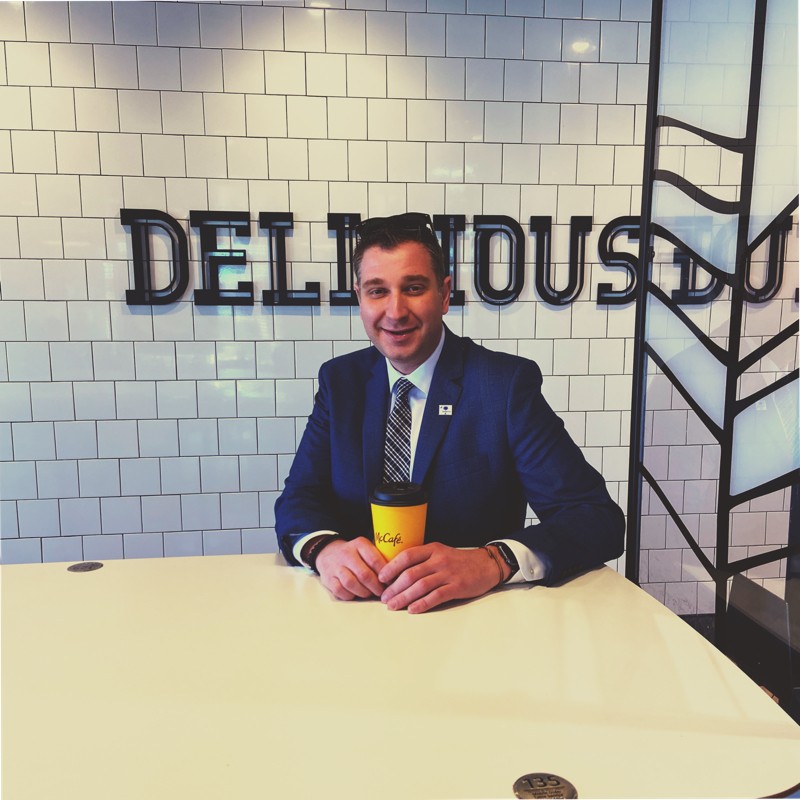
Ngadhnjim "Nimi" Rama, Vice President of Operations overseeing 26 McDonald's locations, understands that friction firsthand. A first-generation American born in Sandwich, Illinois, he started his 25-year career taking orders in the drive-thru as a 14-year-old. Rising through every operational rank to earn the 2013 Ray Kroc Award, recognizing the top 1% of the brand's U.S. general managers, taught him that scaling consistency isn't a math problem. It is a readiness one.
“Consistency is staying ready, not getting ready. When we stay ready instead of getting ready, the misses are much more likely not to be misses,” says Rama. Today, he organizes his operational playbook into three core buckets: people, product, and equipment. All three point toward a fixed destination of quality, service, and cleanliness. Instead of treating inspections or equipment issues as one-off crises, his entire framework revolves around that single mantra: staying ready.
The Platinum Rule
Rama views the evolution of modern operations as a shift in empathy. He pushes his leaders to move past the classic Golden Rule toward what he calls the Platinum Rule, treating others exactly how they want to be treated. Building a culture around that idea offers a practical retention tool against the restaurant sector's ongoing struggle with service worker churn.
A short-staffed roster often forces operators to throw untrained bodies onto the floor just to survive a rush. Rama counters that trap by making comprehensive cross-training and preparation the baseline of his readiness framework. "Staying ready is going and understanding how our employees want to be treated," he says.
Because it is often difficult for a single general manager to track the motivations of dozens of employees, Rama leans on the leadership chain beneath them. Department managers, shift leaders, and crew trainers build a chain of empathy. The goal is to make the restaurant's culture visible and magnetic enough that people in the community want to work there because of what they see when they walk in. It is a pull model, not a push.
Micronizing the mandate
Even with a strong culture, translating corporate standards from the executive table to the crew room often becomes a sticking point. Bridging that gap relies on active, two-way communication and simplifying broad goals into actions that make sense for a teenager working the register.
"Sitting at the exec table and bringing it down to the floor level of crew is where the disconnect always is," Rama says, emphasizing the need to "micronize" big visions so they register easily on the floor.
To verify those standards work in practice, he relies on formal audits, supervisor checklists, and his own visits, including running his car through the drive-thru to check the customer experience. He uses layers of verification to catch operational gaps. "Verifying that the systems and routines are working" helps his teams "find the holes in the Swiss cheese," he says.
Saving the shake machine
Rama's philosophy becomes intensely physical when applied to a restaurant's equipment. In his organization, he uses a hybrid maintenance model: in-house facility teams handle day-to-day issues, and third-party specialists tackle complex HVAC or grill repairs. His teams operate under a strict see-it-now, fix-it-now policy to manage facilities proactively.
For that to work, managers need to feel comfortable reporting breakdowns instantly. No workarounds. "We had an internal policy in our organization where we didn't defer any maintenance," Rama says. "We see it now, we fix it now mentality."
Preventive maintenance carries the same weight. Rama uses a planned calendar that breaks routine tasks into day-specific checklists, like filter changes and detailed cleaning of fryers. His teams also keep replacement parts on hand so a minor failure does not turn into a multi-day outage. Staying ready simply means looking ahead to likely failure points and stopping them early with rigorous, calendar-based systems.
Tablets over ties
Running these tight feedback loops relies on an operational reality that looks totally different today than it did two decades ago. The jump from analog to digital infrastructure gives operators the power to leverage back-of-house automation and structured digital checklists.
Maintenance tickets that were once handled by phone calls and paper logs now flow through digital portals. McDonald's locations now rely heavily on networked systems and in-house tech specialists to keep point-of-sale terminals and drive-thru hardware running.
Rather than getting distracted by the experimentation some chains are doing with generative AI tools and robotic kitchen assistants, Rama focuses on technology that matches the speed of quick-service work. He uses in-house tech specialists, known as OTPs, to insulate frontline workers from technology failures so they can focus entirely on the guests.
Contrasting the 2001 clipboard-and-tie manager with the 2026 digital reality, Rama says, "It's that instant gratification in 2026 that I appreciate because I can delegate something and then follow up very quickly when it gets done."
The GPS and the standard
He treats standard operating procedures as data-generating instruments rather than static documents. "The GPS might take you three different ways to get to your destination, but the standard's always going to be the same," Rama says.
For many operators, a technological roadmap often proves only as effective as the people navigating it. Rama considers his staff a surrogate family, a perspective shaped by his mobility within the system as a single professional without children. That deep sense of responsibility is what makes his mix of culture, systems, and tools actually work on the floor.
"The tools are all there," Rama says. "You can create as many tools as you want, but if you don't use them, it's like not having any tools at all. And that's where I think my job is, to make sure that we have the right tools and we have the right person using them."
.webp)