

All articles
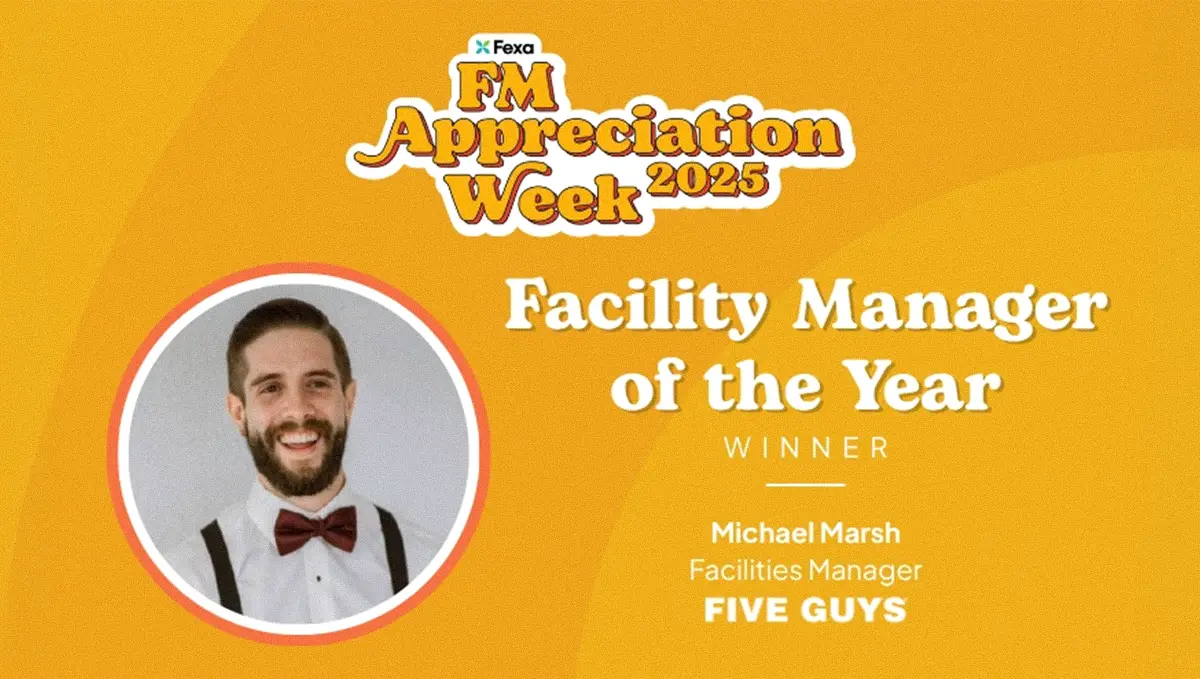
FM Manager of the Year Makes Empowerment His Winning Strategy at Five Guys
Learn how Michael Marsh, Five Guys' FM leader, empowers operators, leverages data, and uses innovative training to drive operational excellence and strategic value.

I truly believe the best way to succeed in a facilities management position is to adopt a customer-service perspective for your operators. Being consistently service-driven and there for them whenever they have an issue is the key to success.

In facilities management, the difference between being a reactive cost center and a strategic business partner often comes down to a simple, but powerful, idea: empowerment. For some leaders, the most effective approach isn’t just about equipping their own team with better tools, but about distributing knowledge and ownership to the people who use the assets every day—the operators on the ground.
It’s a transformation championed by leaders like Michael Marsh, the recently recognized FM Manager of the Year and current Facilities Manager at Five Guys Enterprises. Drawing on experience in the demanding food and beverage sector, including a previous tenure as Facilities Manager for Foxtrot, Marsh has built an operational model centered on people, giving credit to his entire development team for his recognition.
He redefines the facilities role by focusing on its primary function: serving the internal clients who depend on those assets. The service-first approach has the goal of building the trust required for real collaboration and operational efficiency. "I truly believe the best way to succeed in a facilities management position is to adopt a customer-service perspective for your operators," he says. "Being consistently service-driven and there for them whenever they have an issue is the key to success."
No such thing as TMI: This trust is built on a commitment to proactive communication. Marsh’s strategy transforms communication from a simple task into a core cultural value he applies equally to his internal team and his external partners. "Everyone on my team knows they can reach out at any time, through any channel, whether that's an email, a text, a phone call, or even a Zoom call to share a screen," Marsh states. "We overcommunicate everything that's taking place, whether that's a new piece of equipment being installed or an emergency service visit."
Talk is not cheap: "For my vendors, clear communication is the single biggest KPI for me, year after year," he emphasizes. "You need to consistently communicate. That means getting on the phone with my team, putting detailed notes in our CMMS, and making sure everything you do on-site is documented so we can all look it over."
With trust established, he puts his most powerful tool to work: data. He uses it to translate day-to-day operational problems into a language the C-suite understands. "Using data to tell a story is what makes the difference in getting a large-scale project approved," he says. "When we present to the C-suite, that data is how we tell the story of what's taking place on the ground and what resources are needed to get the job done."
From insight to action: But this strategic view of data is grounded in day-to-day practice. By analyzing information within their Fexa CMMS, Marsh’s team can move from reactive problem-solving to proactive pattern recognition. "For a recurring issue, like an operator reporting that a fryer isn't working again, I can go right into our CMMS," Marsh details. "I filter all the data, read the tech notes, and look at the invoices to see the full history of what's taken place. That's how we analyze everything from a data perspective."
A training adventure: The insights from this data inform Marsh’s most innovative strategy to include the entire operational staff in training. "My team hosts a monthly call for our operations members that I call our 'choose your own adventure' session," he reveals. "We ask them: What issues are you having? What do you want to learn? If we can't answer a question one month, we'll table it for the next and bring in subject-matter experts, whether it's a specific vendor or an equipment manufacturer, to provide answers."
This isn't just a soft skills initiative. For Marsh, training is a financial strategy, connecting a cultural initiative directly to the bottom line by improving key industry metrics. "That education might be the difference between somebody solving a problem themselves or actually putting in a work order, which comes down to dollars spent," he notes. "If we can avoid truck rolls and things that aren't a first-time fix, that's the ultimate goal: to empower everybody with enough education to solve things before they even need to be sent to a vendor."
For Marsh, the entire system of service, communication, data, and training leads to one powerful conclusion. Widespread empowerment, he believes, is the single most effective strategy for driving business performance. "When you have more people in your organization who understand what goes on in these sites day-to-day and how they can troubleshoot, you'll find that it will kill any KPI you're looking to have."
Ultimately, Marsh’s vision extends beyond the walls of Five Guys. He hopes to change how facilities management is perceived from within, reframing it as an engaging and valuable part of any successful organization. "My biggest goal for 2026 is to make facilities cool and something that people want to care about, because it's only going to benefit the entire organization."

.webp)