
All articles
KFC Responds to the Skilled Trade Shortage by Developing In-House Facilities Expertise
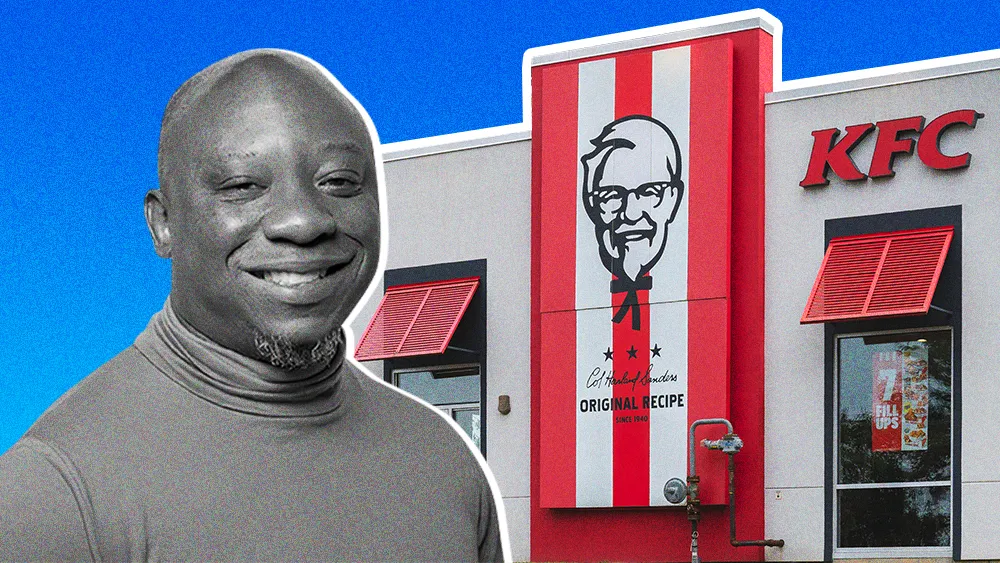
Tee McCluster, Head of National Corporate Facilities at KFC, confronts a shrinking skilled-trade pipeline by building internal capability, data discipline, and long-term technical strength.

I require our technicians to perform those inspection tasks monthly to build the repetition and expertise they need, so that when it's time to be fully serviceable, they have true, working knowledge.

The core operational strain for multi-location restaurant brands is no longer just finding people. It's finding capability. The talent pool is thinning at every layer across the FM ecosystem, from independent trades to contractors to equipment manufacturers. As QSRs bring facilities management in-house to regain control of cost and quality, they're running straight into the same shortage and competing with the very trades they depend on. The result is a capability crisis that forces brands to rethink how they build and sustain the skills required to keep their restaurants running.
Tee McCluster, Head of National Corporate Facilities at KFC, lives this capability crunch every day. After national roles at Checkers & Rally’s and 7-Eleven, he now leads a fast-growing facilities department that has taken shape quickly and demands constant momentum. His answer to a crowded hiring market is simple: he's building the talent himself. By partnering with equipment manufacturers, he turns what used to be a recurring expense into training, repetition, and real expertise for his technicians. The result is a team that is not just staffed, but skilled.
"We partner with equipment manufacturers like Henny Penny to get our in-house technicians trained for yearly fryer inspections, which creates $60,000 in annual savings," says McCluster. "But the certification itself isn't enough. I require our technicians to perform those inspection tasks monthly to build the repetition and expertise they need, so that when it's time to be fully serviceable, they have true, working knowledge." McCluster follows a philosophy of steady capability-building, where he makes maintaining momentum a priority for expanding the team's skillset.
Keep the ball rolling: Effective FM leadership, he says, often means operating "one step ahead" by turning the end of one training cycle into the beginning of the next. "As a department head, you must always think ahead to maintain momentum. As soon as we finished the Henny Penny certification, I was already coordinating with our engineering department to connect with Pitco for the next training. The goal is to move right off the heels of one success to the next to keep that momentum going."
Back to basics: Of course, a proactive strategy must still account for the daily demands of facilities management. Here, McCluster’s discipline extends to reactive triage, where he applies a logical framework to determine what constitutes an emergency. "For us, critical is life safety first. After that, it's the equipment that produces the product. We sell chicken, so our fryers are the number one asset. We simply can't sell a product if we can't cook it."
His proactive mindset also informs his approach to data, turning what could be a passive dashboard into an active leadership tool. By partnering closely with his CMMS provider, Corrigo, he focuses on translating overwhelming data into actionable intelligence. He explains how this process exposed "invisible waste" and prompted alignment between the facilities and operations departments. The resulting metrics served as a catalyst for behavioral change.
The $250,000 question: "We ran a report on 'dead money' from incurred costs on work orders that were placed but never completed. Year to date, that figure was $250,000. I broke that data down store-by-store and presented it to our operations partners. It prompted a conversation about whether a work order is truly needed and if we are prepared to see the repair through to completion," McCluster explains. "The numbers don't lie, and using data this way helps us make better, more aligned business decisions."
One size fits none: His grounded pragmatism also informs his AI philosophy. In contrast to the industry buzz around automation, McCluster's view is that AI's value is entirely contingent on a mature data foundation. "Any AI is only going to be as good as the data you give it. And you have to be the one to give it that data first. I can't use data from a competitor like Church's or Popeyes because our assets are fundamentally different. They might have a two-year-old building while mine is seventeen years old. We aren't facing the same struggles, so their data serves me no purpose."
McCluster’s work is about bridging the "modernization gap" between aging infrastructure and changing consumer expectations. "Nobody wants a car with a CD player anymore," he notes, explaining how future FM roles will likely require deeper technical literacy to manage the reality of smart kitchens and intelligent ovens.
He concludes with a clear line between the project-based role of construction and the lifelong responsibility of facilities management. "Construction builds them. I maintain them," he says. "They build and go. I’ve got them for life."