
All articles
The QSR Industry's Pivot to Smaller Footprints Is Creating a Facilities Puzzle That Legacy Playbooks Can't Solve
The QSR industry is pivoting to smaller-footprint formats to manage elevated real estate costs. But denser equipment, modular construction unknowns, IoT complexity, and format diversification are creating facilities management challenges that legacy playbooks weren't built to handle.


The International Franchise Association's 2026 outlook projects a quick-service restaurant sector adapting to elevated real estate costs through smaller-footprint, asset-light formats: drive-thru-only builds, dual-brand concepts, and cloud kitchens. The IFA report also notes that AI-led technology investments are a top priority, with operators looking to "structurally reduce reliance on labor, particularly in front- and back-of-house processes." The industry is projected to reach more than $1.5 trillion in sales in 2026, but much of that growth is price-driven rather than traffic-driven, leaving margins thin and the pressure to optimize per-square-foot economics intense.
The development pipeline reflects the shift. Raising Cane's plans to open nearly 100 locations, according to SFGate, in 2026, including flagships near SoFi Stadium and at Fisherman's Wharf. Dutch Bros is targeting at least 180 new sites. Portillo's appointed Jennifer Pecoraro-Striepling as Chief Development Officer to lead prototype design and construction strategy.
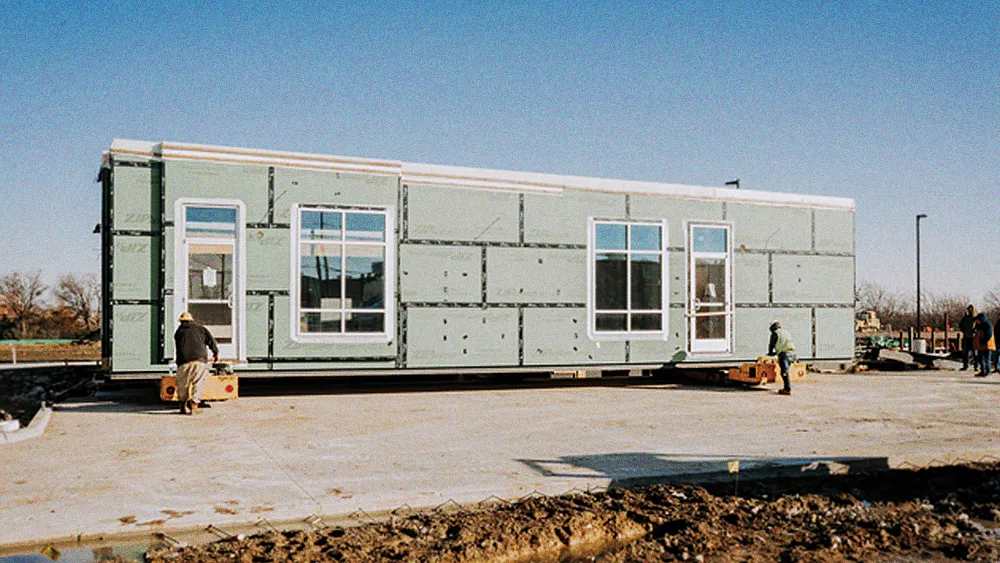
The modular signal: Golden Chick debuted a modular-constructed restaurant prototype at 1,920 square feet. The modular unit takes approximately five weeks to complete once the site is prepped and costs 10-15% less than traditional builds. President Jim Stevens told Nation's Restaurant News that the model will "allow our franchisees to go to market quicker than ever before, while reducing the overall development and operational costs." The unit features a drive-thru and an online order pickup area, and represents a bet that standardized, factory-built construction can deliver consistency at a cost traditional general contractors cannot match. What remains less examined is how a modular-built restaurant ages over 10 to 15 years compared to a traditionally constructed one, and what the long-term maintenance and renovation profile looks like when the building was assembled in a factory rather than built on-site.
The economics of smaller footprints are compelling. How they age, who maintains them, and whether modular construction delivers on its long-term promise will play out over the next decade.