

All articles
As Global Facilities Ops Struggle With Data Fragmentation, AI Offers A Fix
Denis Losev, Regional Facilities Manager at Amazon Logistics, raises an early warning about the complexity of fragmented facilities systems and underscores the urgency of effective AI adoption.

We are automating data extraction, analysis, and distribution to the data owners for validation. Getting rid of manual, routine labor is one of our primary initiatives right now.
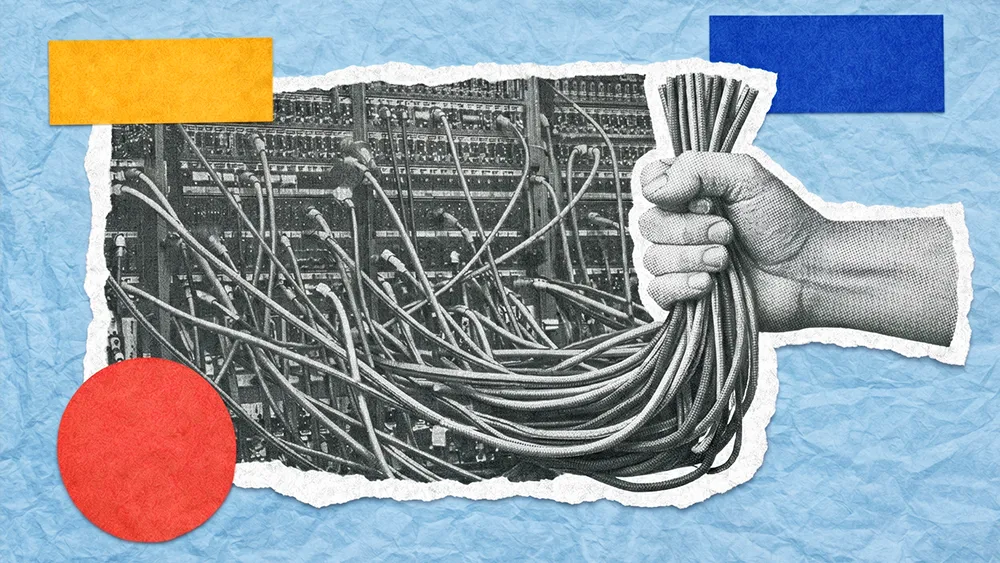
When a central facilities management team tries to enforce consistent standards across such a network, their primary hurdle is not a lack of data. It's that the data is trapped across hundreds of disconnected platforms. Digital transformation efforts have just become an exercise in stitching together metrics from dozens of sources to establish a baseline. To fix the mess, some teams are turning to AI as a connective layer that finally makes global standardization possible.
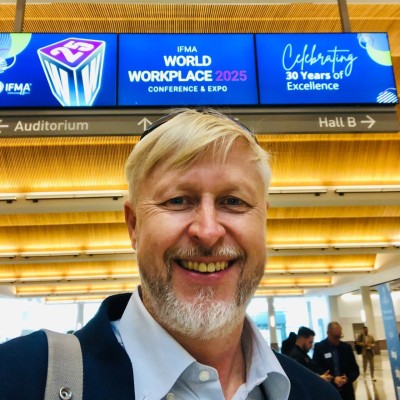
"We have hundreds of different systems, and we need to grab different data from different systems," says Denis Losev, Regional Facilities Manager at Amazon Logistics. With more than 25 years of experience in the sector with Philip Morris International, Losev manages a testing ground for enterprise operations. His current focus is rolling out a unified performance management model for base-building maintenance contracts across the globe, having already deployed it in Europe and the UK. For Losev, it's the pursuit of unified models that can address how facilities managers use their data.
The great data scramble: Losev describes a monthly cycle that requires pulling vendor performance data from across those disconnected systems. “We have a set of KPIs contractually agreed upon with all our vendors, which means we need to collect performance data at the beginning of each month. We are not the only company that doesn't have one system for everything.”
That fragmentation is what makes standardization so difficult, and what makes AI such a useful tool. In Losev's operation, performance metrics for baseline building maintenance are contractually defined across all vendors, but the data needed to track those KPIs is stored in systems the organization already owns, in different formats across different platforms. Gathering that data usually takes dozens of spreadsheets and hours of manual extraction. Losev's approach leverages the fact that automating routine work can eliminate much of the manual data extraction, pushing the human role to the "last mile" of the process and speeding up the pipeline. When algorithms handle the initial aggregation, data owners can step in to conduct deep dives, provide human validation, and analyze anomalies.
Death to data entry: For Losev, there is a clear priority for automating work that adds zero value, so people can focus on what actually requires their judgment. “We are automating data extraction, analysis, and distribution to the data owners for validation. Getting rid of manual, routine labor is one of our primary initiatives right now.”
That drive for visibility naturally extends to quality assurance. Many large portfolios rely on centralized vendor governance models to manage hard services across logistics networks. But for most enterprise teams, such as Losev's, there simply are not enough hours in the day to manually review every piece of vendor documentation generated by equipment breakdowns. To close that gap, his team is deploying AI to check the relevance and quality of CMMS documentation and photos.
Beyond technical implementation, scaling AI across an enterprise means managing how people experiment with new tools. Recent surveys and reports on AI in facilities suggest that highly autonomous organizations often end up with different groups exploring similar ideas in parallel. Losev approaches AI as functional code that needs clear governance rather than a standalone initiative.
Taming the matrix: To keep projects organized, Losey's team centralizes AI workstreams through an internal intelligence hub and actively surveys employees while monitoring overlapping workstreams and unintended issues. “We are centralizing all AI-related workstreams through an internal intelligence hub. That structure gives us better control and prevents situations where one workstream is doing exactly the same thing as another."
Code, not magic: Losev also pushes back on the mystique around the technology itself, emphasizing the need for human validation at every stage. “We call it artificial intelligence, but in reality, it's just a set of algorithms, big data, and a massive library of information that still requires a final check by a human being.”
Even with a foundation in place, many facilities leaders frequently face the challenge of balancing experimentation with structure. Building organizational fluency through exploration helps teams understand what these tools can actually do, provided every pilot program ties back to specific business goals.
Value over vanity: Acknowledging that enterprise innovation is messy, Losev demands intellectual honesty when weighing new technology against the actual value it delivers. “Managers should see clearly how every trial is connected to your business goals and objectives, and what added value it is supposed to generate. Understand that your organization's AI needs will be driven by value, not hype."
The coffee metric: As algorithms take on more manual tasks, some industry conversations are moving beyond efficiency to focus on long-term workplace culture. With AI agents starting to function like peers in certain service environments, Losev argues that organizations want to intentionally preserve the human side of work and maintain real connections. “How do we maintain our humanity and identity in an environment where AI agents are already becoming our peers and colleagues? Sometimes, we just need to have a cup of coffee with real human beings in a real office to perform at our best.”
Still, for all the governance guardrails and security concerns, Losev says the worst thing a facilities leader can do right now is wait. The fragmentation problem is not going to resolve itself, and the tools to finally address it are available to point at the right problems. "Don't lose your time," says Losev. "Set up trials and explore software. In the field of facilities management, we're fotunate in that the solution is probably out there."